Planning a kitesurf trip to Indonesia? Good choice. Warm water, tropical islands, friendly people, and some seriously underrated wind spots make Indonesia one of the most exciting places for a kitesurf holiday.
But before you start thinking about kite sizes, board bags and coconut sunsets, there are a few arrival basics to sort out: visa, passport, arrival card, customs form, travel insurance, and what to know when flying with kitesurf gear.
Nothing complicated — but Indonesia is a big country, and the rules can feel confusing if it is your first time here. So here is the simple, practical version for kitesurfers.
Already planning a kitesurf tip in Indonesia? Discover our short guide to Epic Kitesurf in East-Indonesia.
In Short: What Kitesurfers Need Before Traveling to Indonesia
- Most tourists need either a Visa on Arrival or e-Visa on Arrival.
- The standard tourist stay is 30 days, usually extendable once for another 30 days.
- Need more time for your kitesurf holiday? A Visa on Arrival or e-VOA can usually be extended once, giving you up to 60 days total.
- Your passport must be valid for at least 6 months from the date you arrive.
- You may be asked for a return or onward ticket.
- Indonesia now uses digital arrival forms, so complete them before you fly when possible.
- Travel insurance is not always mandatory, but for kitesurfers, it is strongly recommended.
- If you travel with kitesurf equipment, check domestic flight baggage rules carefully.
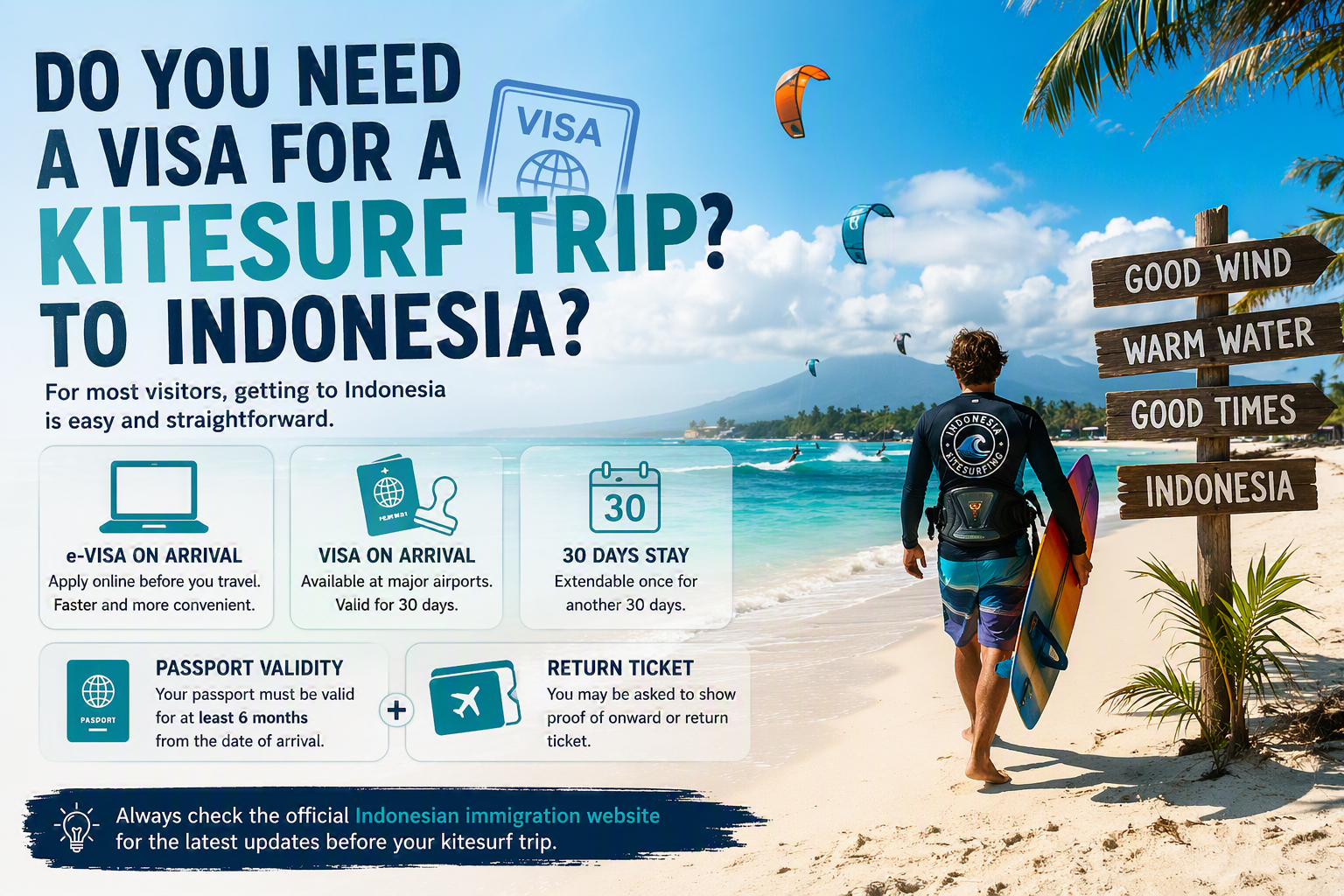
Do You Need a Visa for a Kitesurf Trip to Indonesia?
For most visitors coming for a holiday, Indonesia is quite straightforward.
If you are visiting from Europe, the UK, Australia, New Zealand, the US, Canada, Japan, or many other countries, you will usually be eligible for a Visa on Arrival or an electronic Visa on Arrival.
The official Indonesian immigration website allows travelers to apply online, pay, download the visa once approved, and track applications. It also confirms that an arrival card submission is required for travelers entering Indonesia.
For a normal kitesurfing holiday in Indonesia, this is usually the visa you need.
Option 1: e-Visa on Arrival — Best Before Your Kitesurf Trip
The e-Visa on Arrival, often called e-VOA, is the online version of the classic airport visa.
You apply before you travel, pay online, and receive the visa digitally. The official Indonesian eVisa system explains the process as: apply, pay, then download the visa after approval.
Why we like it for kitesurfers:
- Less paperwork when you land
- Faster arrival process
- Easier if you arrive tired after a long flight
- Useful if you are connecting onward inside Indonesia with kite bags
- You can keep a digital copy on your phone
Our advice: if you are organized, do the e-VOA before flying. It saves stress and gets your kitesurf trip in Indonesia started faster.
Just make sure you use the official Indonesian immigration website, not a random visa agency charging extra fees. The official site is listed as Indonesia’s eVisa website by the Directorate General of Immigration.
Option 2: Visa on Arrival — Still Works for Many Kitesurf Travelers
If you did not apply online, many visitors can still get a Visa on Arrival when they land at major international airports.
This is the classic route: arrive, pay, get the visa, go through immigration.
It works, but there are two downsides:
- You may have to queue.
- If several international flights land at the same time, it can feel slow.
How Long Can You Stay?
For most tourist visitors, the standard stay is 30 days.
In many cases, this can be extended once for another 30 days, giving you up to 60 days total. VFS Global, an official partner for Indonesia e-VOA services, lists the e-VOA as a single-entry visa with a 30-day stay and 90-day validity.
That is more than enough for most kitesurf trips, especially if you are coming for one or two windy weeks.
How to Extend Your Visa During Your Kitesurf Trip
Sometimes 30 days is not enough. You arrive, catch the wind, meet good people, discover another island… and suddenly your Indonesia kitesurf trip needs more time.
If you entered Indonesia with a Visa on Arrival or e-Visa on Arrival, you can usually extend it once for another 30 days. That means your total stay can become up to 60 days.
The smart move is to begin the extension process 7 to 14 days before your visa expires. Do not wait until the last day. Immigration offices can be busy, public holidays happen, and some steps may take longer than expected.
You will usually need:
- Your passport
- Your current visa or entry stamp
- A return or onward ticket
- Your address in Indonesia
- Payment for the extension fee
If you are heading to a remote kitesurf spot, think ahead. It is much easier to extend your visa while you are still near a city or immigration office than from a small island with weak Wi-Fi.
Simple rule: if you think your kitesurf trip might become longer, extend early.
Passport Requirements for Traveling to Indonesia
- Valid for at least 6 months from your arrival date
- In good condition
- With enough blank space for immigration stamps
Airlines can refuse boarding if your passport does not meet the rules. That means the problem can happen before you even reach Indonesia.
So check your passport today, not the night before your kitesurf trip.
Return or Onward Ticket Requirements
Immigration may ask to see proof that you will leave Indonesia before your visa expires.
Usually this means:
- A return ticket home
- A flight to another country
- A clear onward travel itinerary
Simple rule: if you have it ready, nobody asks. If you do not, that is when they ask.
The Digital Arrival Card for Indonesia
Indonesia is moving more arrival procedures online. The official eVisa website states that arrival card submission is required and that travelers can submit it online before arrival.
There is also an official All Indonesia government platform where travelers can complete their arrival card online before traveling.
This is not a visa. Think of it as the digital form that helps immigration, customs and health authorities process arrivals faster.
Our advice for kitesurf travelers:
- Complete it before flying if possible
- Take a screenshot of the QR code
- Keep it available offline
- Do not wait until you are standing in the airport queue with weak Wi-Fi
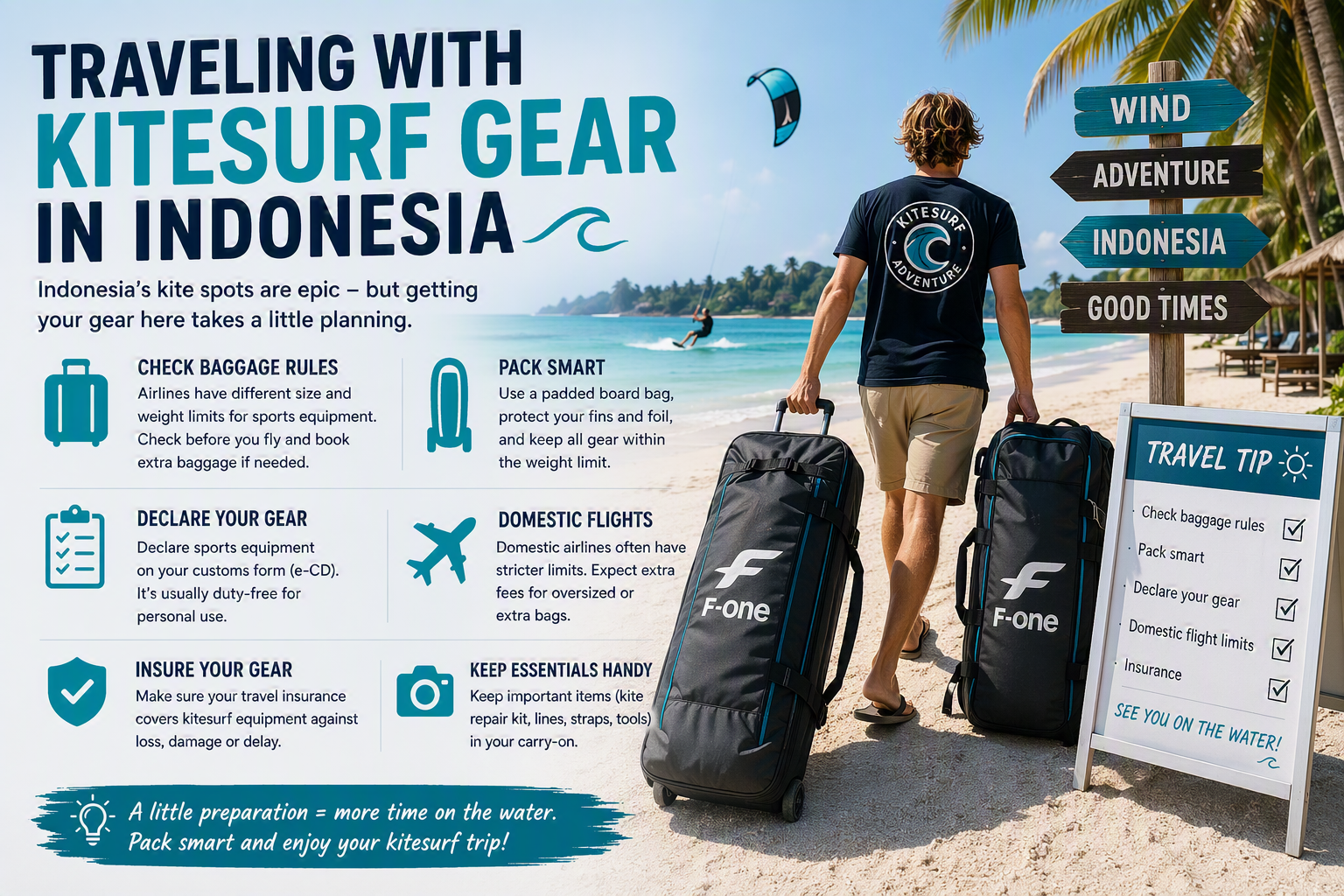
Customs Declaration When Traveling With Kitesurf Gear
Indonesia also has an official electronic customs declaration system for international arrivals. The Indonesian Customs website describes the e-CD as mandatory for all international arrivals by air and sea. Depending on your arrival airport and the latest rollout of the All Indonesia system, the arrival card may include customs information, or you may still be directed to complete the customs form separately.
Personal kitesurf equipment is usually fine, but if you carry several brand-new items, commercial stock, or equipment for resale, that is a different story.
Traveling With Kitesurf Gear in Indonesia
This is where kitesurfers need to pay attention. Indonesia has many great kitesurf spots, but they are not always next to your international arrival airport.
You may need a domestic flight, ferry, car transfer, or sometimes all three.
Before flying with kitesurf equipment, check:
- Maximum board bag length
- Sports equipment fees
- Domestic flight baggage allowance
- Whether your ticket includes checked baggage
- If your kite bag must be pre-declared
- Weight limits on smaller regional aircraft
International airlines may accept your kite bag easily. Domestic airlines may be stricter.
Also, label your kite bag clearly and keep fragile items well protected.
Some routes are smooth; others are more adventurous. Welcome to Indonesia!

Health Requirements Before a Kitesurf Trip
For most travelers arriving from Europe, Australia, North America, or major Asian hubs, there are usually no special vaccination requirements for a simple holiday.
However, if you are arriving from or transiting through a country with yellow fever risk, you should check the latest health requirements before traveling. Indonesia previously used a separate SATUSEHAT Health Pass, but the SATUSEHAT page now indicates that international health declaration services are redirected to the All Indonesia platform.
As always, check official sources close to your travel date, especially if your route includes Africa or South America.
Kitesurf Travel Insurance: Not Just a Nice-to-Have
Even when insurance is not mandatory, kitesurfers should not travel without it. Indonesia is beautiful, but many kitesurf spots are remote.
If something goes wrong, you want proper support. Make sure your insurance covers:
- Kitesurfing
- Watersports
- Medical care
- Emergency evacuation
- Lost or damaged kitesurf equipment
- Trip delays or missed connections
Do not assume kitesurfing is included. Many standard policies exclude “extreme sports” or “adventure activities.”
Read the fine print before you ride.
Practical Tips
Money
- Food
- Local transport
- Tips
- Small shops
- Boat transfers
- Unexpected baggage fees
SIM Cards
- Telkomsel
- XL
- Indosat
If you are going remote for kitesurfing, Telkomsel usually has the widest coverage.
Buy a SIM at the airport or in town, and keep WhatsApp ready. In Indonesia, almost everything runs through WhatsApp: drivers, hotels, instructors, boat transfers, restaurants — everyone.
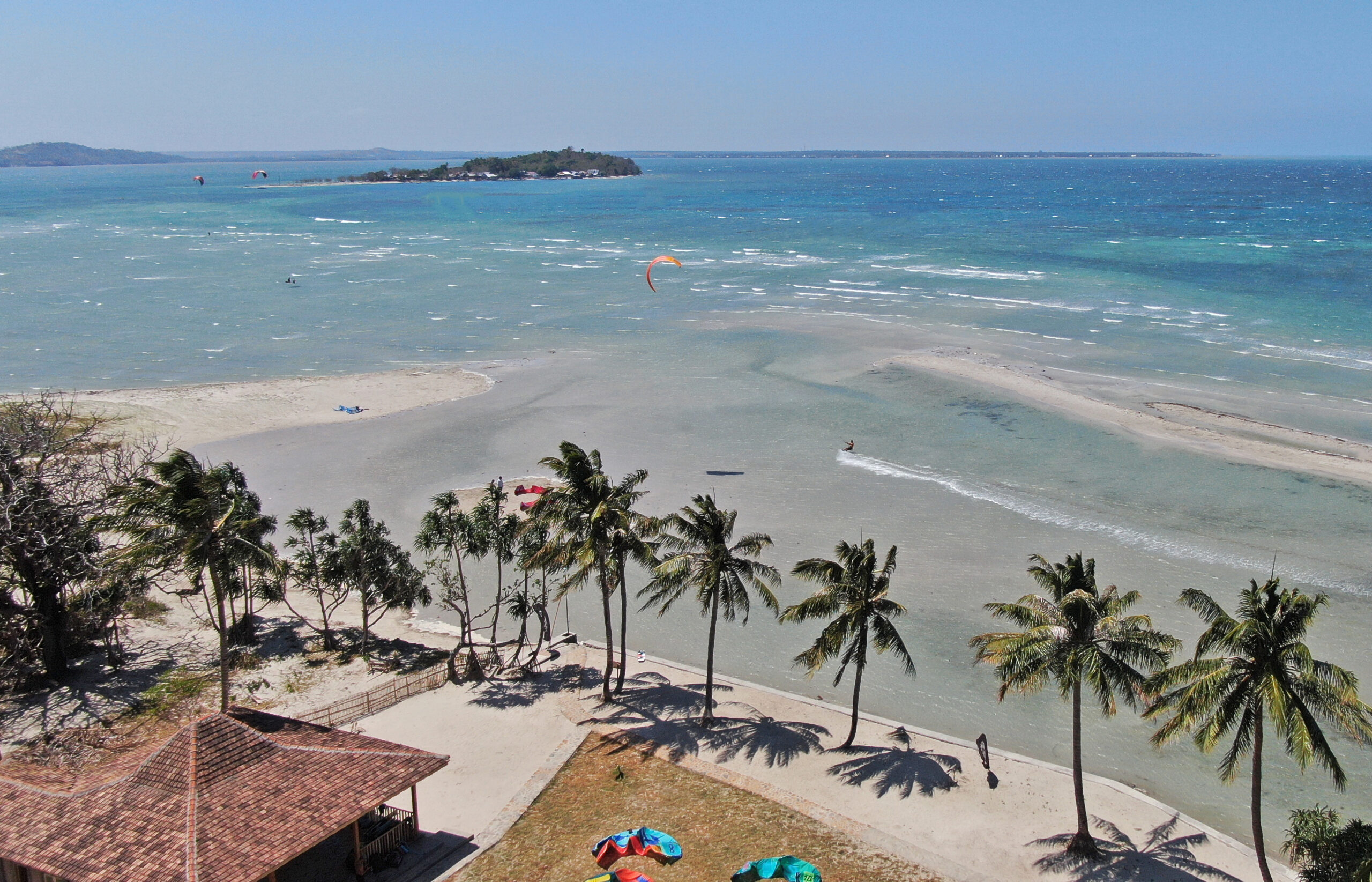
Best Time to Come for Kitesurfing in Indonesia
Indonesia is huge, so the wind depends on where you go.
But in many Indonesian kitesurf destinations, the most reliable season is usually during the dry-season trade winds, roughly from May to October.
- Warm water
- Trade winds
- Sunny days
- Fewer wetsuits
- Beautiful island conditions
Some kitesurf spots work outside this window too, but if it is your first trip, choose your destination based on the right season, not just the best-looking photos.
Wind first. Instagram second.
Simple Pre-Flight Checklist
- Passport valid for 6+ months
- Visa or e-VOA sorted
- Visa extension plan if staying longer than 30 days
- Arrival card completed online
- Customs declaration completed if required
- Return or onward ticket
- Travel insurance with kitesurf cover
- Accommodation details
- Domestic baggage allowance checked
- Kitesurf gear packed properly
- WhatsApp installed
- Some cash available after arrival
Land, Unpack, Ride!
Indonesia is not just a kitesurf destination—it is an adventure. From tropical islands and friendly local communities to warm water and reliable wind, it offers an experience that keeps riders coming back year after year.
Sort your visa, pack your gear, and get ready for your next session.
See you on the water. 🌴💨🏄♂️
FAQ
Do I need a visa for a kitesurf trip to Indonesia?
Can I apply online before traveling?
Can I extend my Indonesian visa during my kitesurf trip?
Do I need to complete an arrival card?
Do I need travel insurance for kitesurfing in Indonesia?
Where is the best place for a kitesurf trip in Indonesia?
If you are looking for strong, reliable wind and a real kitesurf-focused trip, our home spot is JENEPONTO, South Sulawesi. It is where we ride, host guests, and focus all our local knowledge — not a list of random destinations across Indonesia.
For us, Jeneponto is one of the best wind spots in Indonesia: steady wind, warm water, a quiet local atmosphere, and a proper kitesurf playground away from the crowded tourist routes. If your goal is simple — wind, space, and a real Indonesian kitesurf experience — JENEPONTO is the spot to look at.