Let’s be honest. Sharing a beautiful kite spot with a few friendly riders is great. Fighting for room at the launch, dodging twenty students and queuing for the flat-water section is not.
Asia has several famous kitesurfing destinations, but the best-known names are not always the best choice if your idea of a kite trip involves space, reliable wind and a genuine sense of discovery.
For this guide, we have focused on six destinations where you can still find uncrowded water and a more authentic local experience. Some are best for strong-wind riders, some offer easier lagoon conditions, and others require a little more patience and travel effort.
These spots are not ranked by wind strength. We have considered:
- Wind reliability during the main season
- Space on the water
- Quality and variety of the riding conditions
- Suitability for different riding levels
- Access to lessons or rental equipment
- Travel experience and atmosphere away from the water
- The feeling of riding somewhere that has not been overtaken by mass tourism
Every kite spot can change according to the tide, weather system and exact launch area. Always check the current forecast, speak with local riders or schools, and assess the conditions before launching.
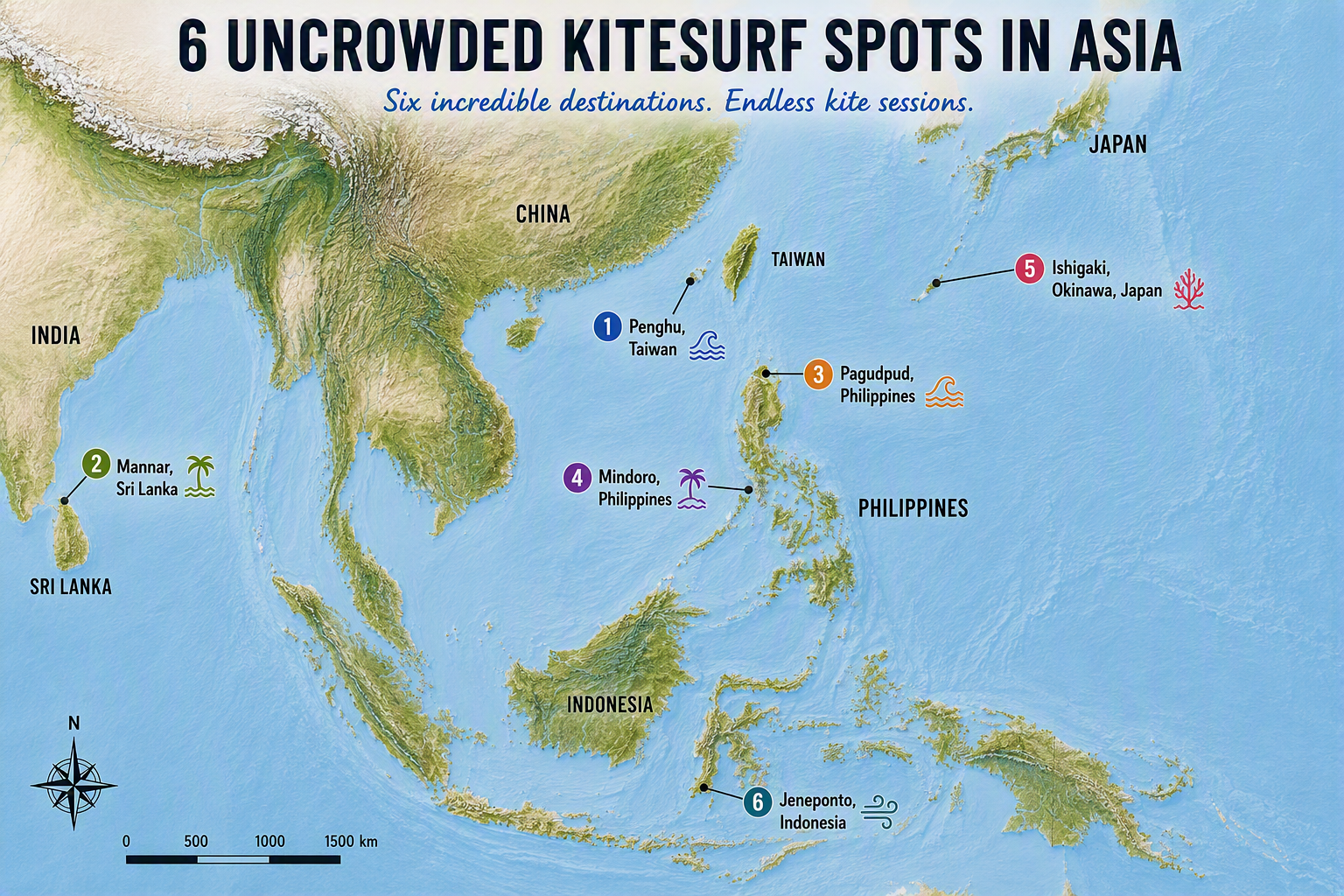
Why These Kitesurf Spots in Asia Stand Out
| Spot | Country | Best Season | Conditions | Best For |
|---|---|---|---|---|
| Penghu | Taiwan | October to March | Strong winds, choppy water, big kickers, open-sea riding, some wave spots | Advanced riders, big-air enthusiasts |
| Mannar | Sri Lanka | May to September | Huge shallow lagoon, flat water, warm temperatures | Flat water progression and long relaxed sessions |
| Pagudpud | Philippines | November to March | Side-onshore wind, rolling waves, open ocean conditions | Powered freeride, wave riding and adventurous kiters |
| Mindoro | Philippines | November to April | Flat-water bays, moderate chop, tropical island setting | Flat-water progression and island adventure |
| Ishigaki | Japan | November to April | Crystal-clear water, reef lagoons, small waves | Flexible riders and mixed island holidays |
| Jeneponto | Indonesia | June to October | Consistent trade winds, flat-water lagoon. | Reliable summer wind, fast progression and flat-water big airs. |
1. Penghu, Taiwan: Asia’s Wind Machine
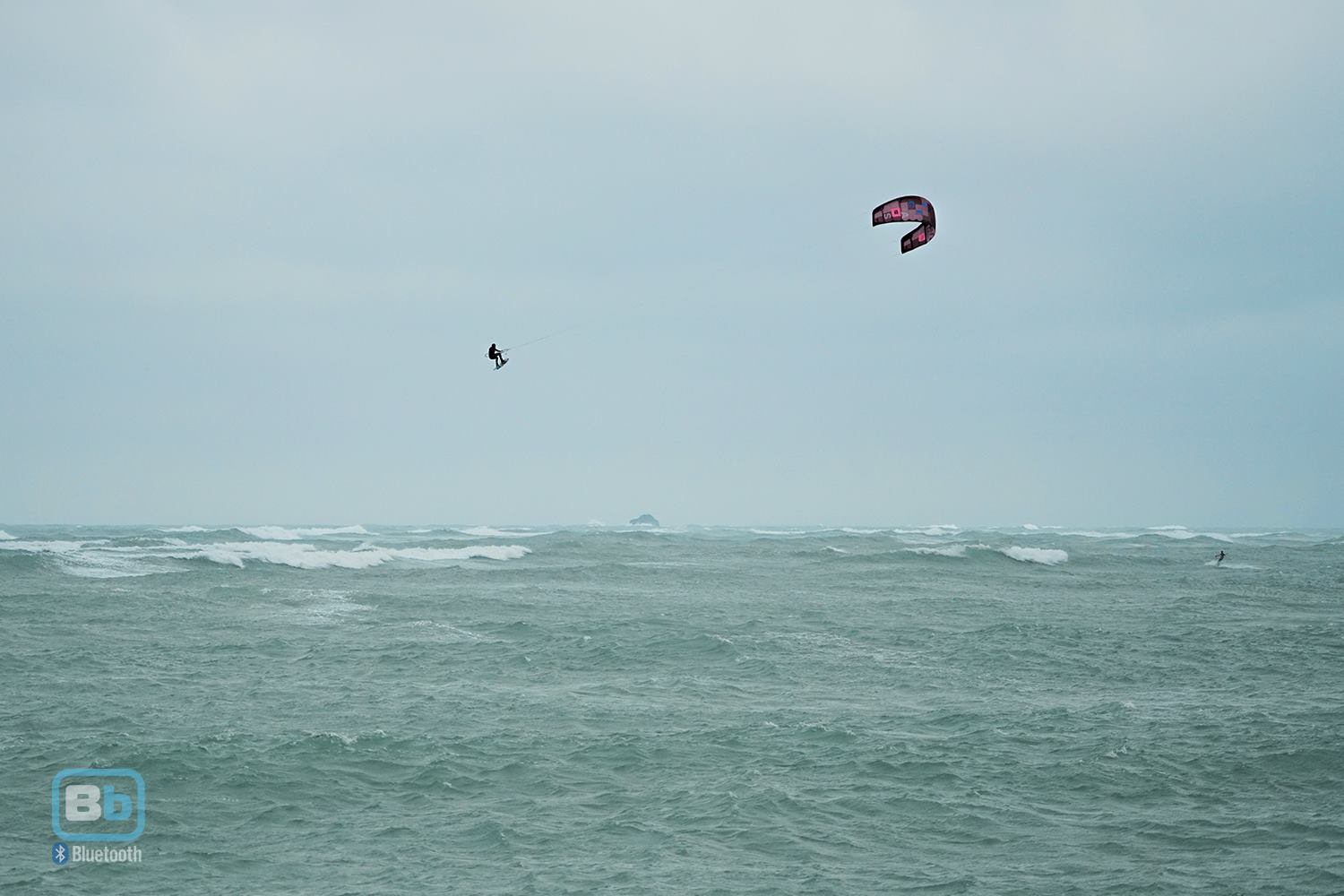
Best for: Advanced riders & big air enthusiasts.
Penghu is not the place to bring only your biggest kite and hope for a thermal breeze. The islands are known for serious northeast monsoon wind, and Longmen Beach is one of the standout locations for riders looking for powered sessions.
Longmen combines open-water riding, strong-wind chop, sections of flatter water and wave potential when the swell lines up. The beach offers room to prepare equipment, but the overall conditions can be demanding when the wind increases.
The main northeast wind period generally develops from autumn through early spring. Published spot guides commonly identify October through March as core months, with strong northeast winds and occasional large waves.
Riding conditions
Do not judge Penghu by a single launch. The island offers several different setups, and choosing the right beach is part of the experience.
Longmen comes alive on the stronger days. Once the wind pushes beyond 30 knots, swell can produce proper wave-riding conditions. The local centre recommends watching the tide carefully, with the period after high tide often offering the best wave setup. When either the wind or tide drops, the same beach can become noticeably less aggressive.
If flat water is the priority, local riders may direct you toward a protected cove such as Chinglou. Its water can be smoother, but the coral around the launching area means careful handling is essential. Rather than arriving with one fixed plan, come prepared to move around the island according to the wind, tide and your riding level
Why we like it
- Proper strong wind for big air with huge kickers
- Plenty of room compared with mainstream Asian kite beaches
- Options for freeride, jumping and waves
- Distinctive island scenery
- An adventurous destination without feeling completely disconnected
What to consider
- Wind can be very strong
- Cooler air and water may require a wetsuit
- Conditions vary between the different launches
- Independent riders need solid kite control
- Transporting a full quiver takes planning
Off the water
Penghu is made for exploring by scooter or car. The archipelago has fishing villages, beaches, coastal rock formations and a relaxed island rhythm. It is a good destination for riders who enjoy discovering a place between sessions rather than staying inside a conventional kite resort.
Local kitesurf hosts
Getting there
Domestic flights connect Penghu with major Taiwanese cities. Once on the islands, having independent transport makes it much easier to follow the wind and reach different launches.
2. Mannar, Sri Lanka: Flat Water and Endless Space
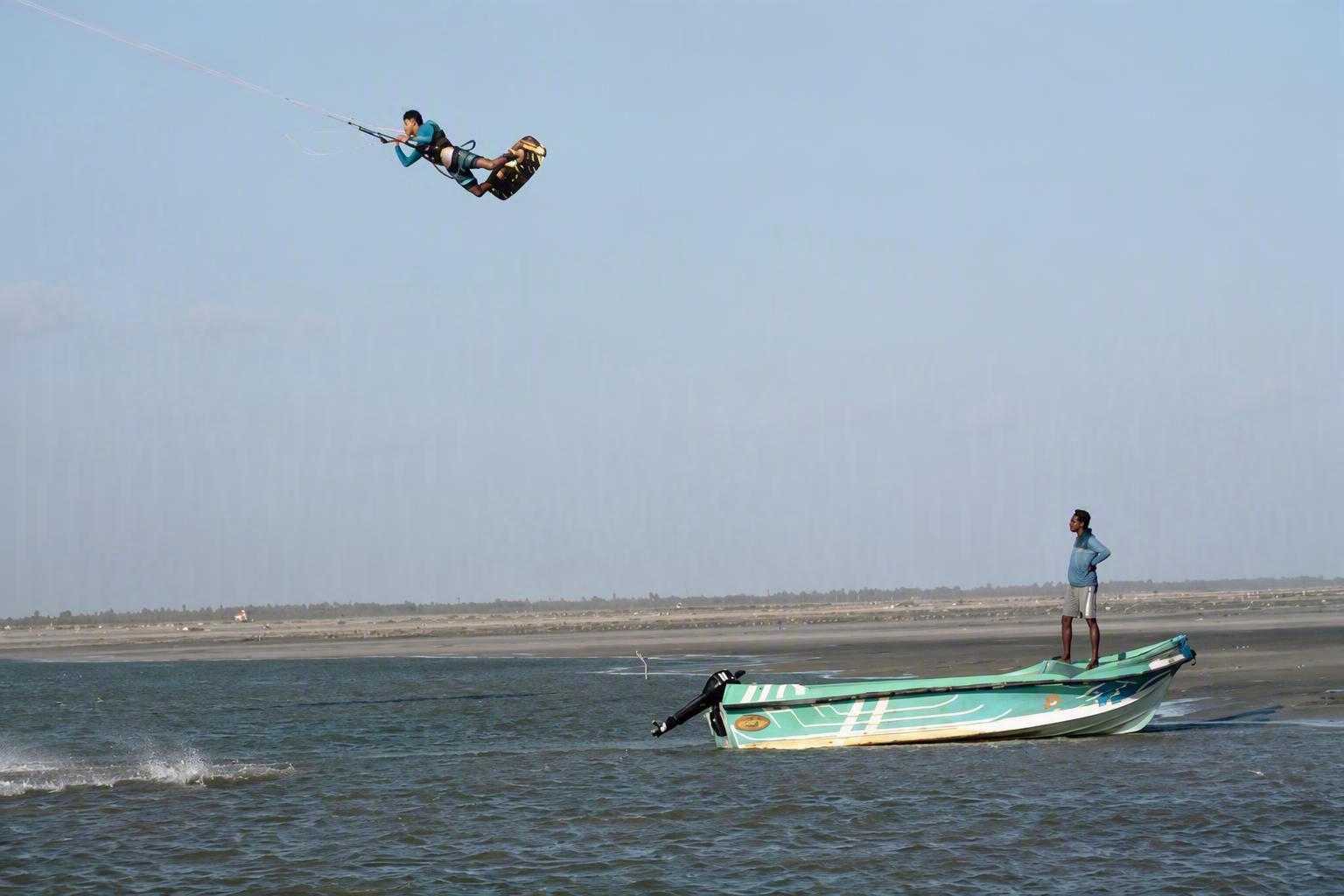
Best for: Flat water, progression and long relaxed sessions
Kitesurf in Sri Lanka is often associated with kitesurf in Kalpitiya, but Mannar remains one of the country’s least crowded alternatives.
Mannar offers something many kitesurfers dream about: a broad riding area, relatively flat water and far fewer riders than Sri Lanka’s more established kite destinations.
The journey to Mannar requires commitment, but that is part of what keeps the spot quiet. Once you arrive, the atmosphere is very different from a busy kite town. Life moves slowly, the landscape feels open and remote, and the main daily decision is usually when to pump your kite.
Riding conditions
Mannar is not a one-season, one-condition destination. The shape of Adam’s Bridge creates distinct riding zones, and those zones respond differently as the seasonal wind changes direction.
From June through September, the lagoon side provides the flatter conditions for which Mannar is best known. Cross the sandbar toward the windward side and the surface becomes livelier, giving confident riders a different kind of session without travelling far.
January and February bring another potential riding window, but the wind pattern changes. The ocean side then operates with offshore wind and should be approached as an advanced setup, particularly for riders interested in foiling or freestyle. Beginners should choose the protected lagoon configuration and ride with local support rather than assuming that every part of Adam’s Bridge is equally accessible
Why we like it
- Large areas of flatter water
- Plenty of room for progression
- Less traffic than Sri Lanka’s best-known kite hubs
- Good potential for long freeride sessions
- A remote and authentic travel experience
What to consider
- Mannar is a long transfer from Colombo
- Tourism infrastructure is relatively limited
- Equipment choice and availability should be checked before travelling
- Non-kiting companions may find fewer activities than at a mainstream resort
- Local customs and communities should be treated respectfully
Off the water
Mannar is more about nature, history and local life than nightlife. Birdlife, fishing communities, coastal landscapes and regional cultural sites make it interesting for travellers who enjoy quieter destinations.
Getting there
The overland journey from Colombo is long, so riders should plan the transfer as part of the trip rather than an afterthought. Arranging transportation through an accommodation provider or kite operator is usually more practical than improvising after arrival.
3. Pagudpud, Philippines: Northern Luzon’s Hidden Wave Spot
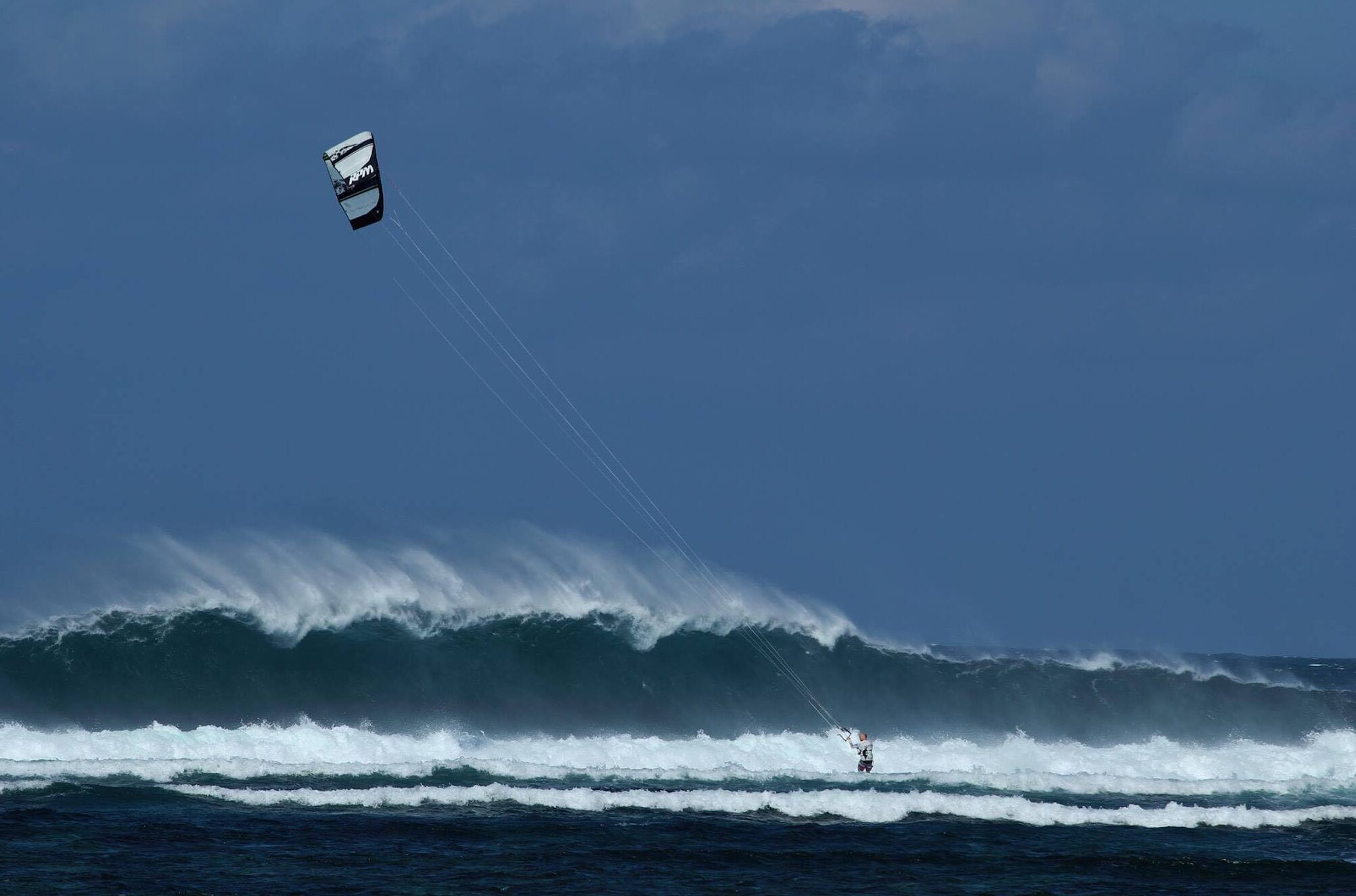
Best for: Powered freeride, wave riding and adventurous kiters
At the northern tip of Luzon, Pagudpud feels a long way from the busy beach destinations usually associated with the Philippines.
That remote location is one of its greatest assets. The coastline is striking, the water remains relatively uncrowded, and the northeast monsoon can deliver strong, energetic conditions.
Riding conditions
Pagudpud has more range than its exposed northern coastline might suggest. Experienced riders can head toward the waves for a more powered session, while Kingfisher also provides a shallower section closer to shore.
The protected section extends for more than 200 metres, according to the resort, but it is not a featureless sandy swimming pool. The bottom changes between sand, vegetation and reef material, so a short local briefing is worthwhile before the first launch.
This combination allows progressing riders to remain in more sheltered water while confident kiters explore the wind and waves farther out. Instruction and watersports support are available locally, making Pagudpud more versatile than a pure wave destination.
Why we like it
- Strong-wind potential during the main season
- Wave-riding opportunities
- Dramatic tropical coastline
- Plenty of space on the water
- A real road-trip atmosphere
What to consider
- Conditions can be demanding
- Rain and changing weather are possible during the monsoon period
- Rental equipment may be limited
- The destination is far from the Philippines’ main international gateways
- Beginners need to select the right location and day carefully
Off the water
Pagudpud works well for travellers who enjoy uncrowded beaches, coastal drives, waterfalls and small local communities. The north of Luzon is worth exploring slowly, so adding a few days beyond the kite schedule can make the journey more rewarding.
Getting there
The usual gateway is Laoag. From there, travellers continue north by road. Renting a vehicle or arranging a private transfer offers more flexibility, particularly when travelling with kite bags.
4. Mindoro, Philippines: Tropical Riding Away from the Crowds
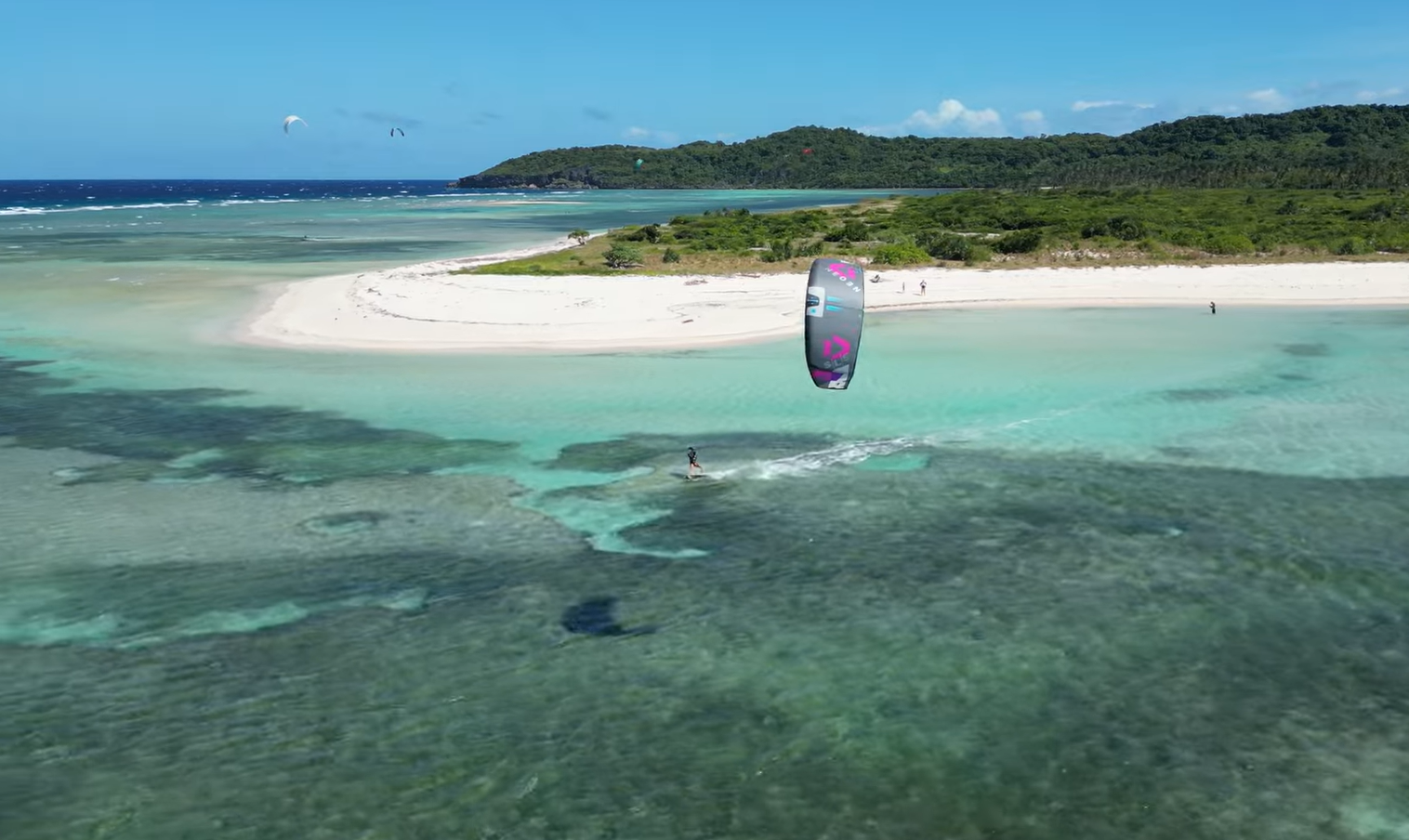
Best for: Flat-water progression and island adventure
Mindoro gives riders two very different experiences from the same base. At Bislig Beach in the south of the island, learners can practise in waist-deep water protected by the reef. Once confident enough to leave that area, independent riders can pass beyond the reef into deeper water and open up a much larger playground.
The local kite centre operates from November until the end of April. The wind approaches the teaching area from the side and toward the shore, allowing lessons to take place directly in front of the accommodation rather than requiring a daily transfer to another beach.
Riding conditions
Inside the reef, the shallow water creates a practical environment for learning, improving board control and building confidence. The available space also allows progressing riders to work on transitions and upwind riding without the pressure of a crowded kite beach.
Beyond the reef, the character of the spot changes. Independent riders can enter deeper water and use Bislig Beach as a starting point for downwind routes and trips toward nearby islands. These outings require local planning, but they give Mindoro a sense of exploration that goes far beyond repeating short runs in front of the beach.
Why we like it
- Waist-deep teaching area inside the reef
- Plenty of room for progression
- Season from November to the end of April
- Deeper-water options for independent riders
- Downwind and island-exploration potential
- Lessons and rental equipment available locally
- Warm water and a relaxed island setting
What to consider
- The protected teaching zone and the water beyond the reef require different skill levels.
- Riders should learn the reef passages and sandbar layout from the local team.
- Rental equipment is available only to riders with a valid recognised licence.
- Kite sizes between 5 and 15 square metres are listed locally, but availability should be confirmed before arrival.
- Downwinders and island routes should be organised according to the conditions and local guidance.
- Reaching southern Mindoro requires more planning than travelling to a mainstream resort.
Off the water
Mindoro works particularly well for travellers who want more than a kite-only holiday. Diving, snorkelling, island trips and coastal exploration provide plenty of alternatives between sessions.
Getting there
Mindoro can be reached from Luzon by ferry, followed by an onward road journey to the south of the island. Build sufficient transfer time into the itinerary, particularly when travelling with oversized kite equipment.
Local kite center: Kitesurf Mindoro at Bislig Beach
5. Ishigaki, Okinawa, Japan: A Winter Kitesurfing Paradise
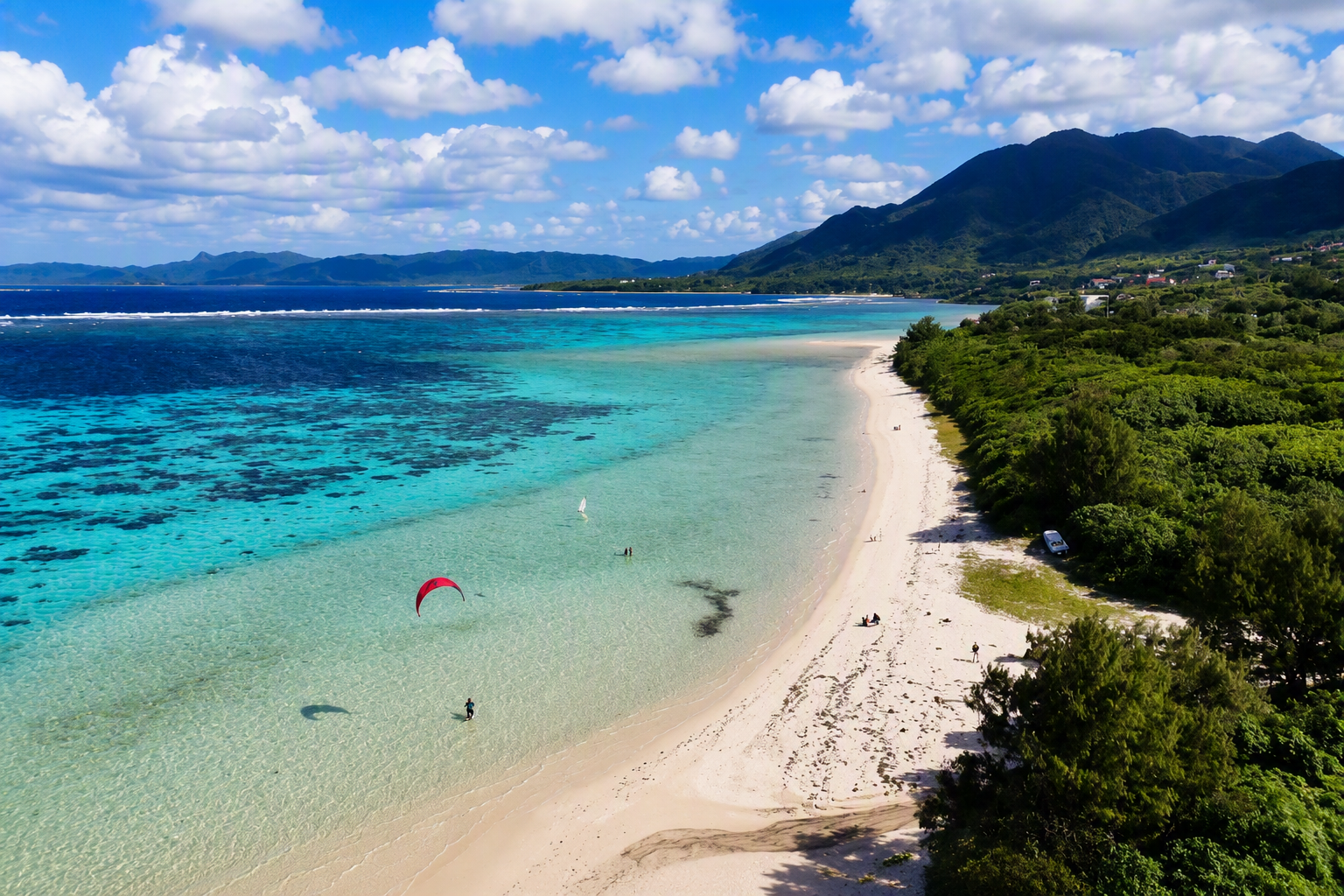
Best for: Flexible riders and mixed island holidays
For travelers researching kitesurf in Ishigaki or winter kitesurfing in Japan, the island offers a unique combination of warm water and reliable wind.
Ishigaki suits travellers who choose the destination first and the kite sessions second. The island offers enough to build a complete trip even when the kite stays packed, making it different from the more wind-focused destinations in this guide.
A session on the water can become one of the highlights of the holiday, but Ishigaki remains worthwhile without daily riding. This makes it particularly suited to flexible kiters, couples and groups whose interests extend beyond the forecast.
Kitesurfer and travel writer Isabelle Fabre presents a similarly balanced view in her Japan trip report, describing Ishigaki as a culturally and environmentally rich island where kitesurfing complements the wider experience.
Wind season
November through March is the principal Okinawa wind window identified in Isabelle Fabre’s trip report. Her December visit included daily sessions across several kite sizes, with a short wetsuit or light full suit suitable for the water conditions she encountered. She also observed that the season can become stronger and cooler as it progresses.
That experience provides useful context, but it should not be treated as a guarantee. Riders should still review the current forecast and contact a local school before organising a trip around expected wind strength.
Riding conditions
The launch is discreet and removed from Ishigaki’s more obvious visitor routes. Rather than selecting a beach from its appearance alone, visiting riders should connect with the local kite community for advice on access, daily conditions and the appropriate riding area.
Isabelle Fabre also notes small surfable waves over the reef. Reef conditions and safe water access should be assessed locally before launching.
Ishigaki rewards an adaptable approach. Check the wind each morning, keep the kite gear ready and allow the rest of the island to shape the day when conditions are unsuitable.
Why we like it
- The trip remains rewarding without daily wind
- Kite sessions fit naturally into a broader island itinerary
- The spot retains an exploratory rather than resort-style character
- Ishigaki works well for groups with different holiday priorities
- Local instruction and rental support are available
What to consider
- Kitesurfing should be one part of the itinerary, not its only objective
- Daily riding should not be assumed
- Reef conditions require local advice
- Spot access is easier with prior directions
- A car is useful for exploring the island
- Equipment transport and vehicle-rental requirements should be checked in advance
- Japan is generally more expensive than the other destinations in this guide
Off the water
Ishigaki has enough depth to prevent non-wind days from feeling wasted. The island supports an active itinerary on land and underwater, while excursions to neighbouring islands add a cultural element rarely found at purpose-built kite resorts.
Isabelle Fabre highlights hiking, diving, manta-ray encounters, beaches, art galleries and nearby Taketomi among the wider reasons to visit.
Getting there
Ishigaki has direct domestic air connections with Tokyo. Independent transport is useful for reaching the kite area and exploring other parts of the island.
Travellers intending to drive should check the current Japanese requirements for licences issued by their own country. Requirements can vary, so a past traveller’s experience should not replace current official guidance.
Firsthand trip review: Read Isabelle Fabre’s guide to kitesurfing in Japan
Lessons and local guidance: Visit Sandy Feet Kitesurfing Ishigaki
6. Jeneponto, Indonesia: The Rising Star of Asian kitesurfing.
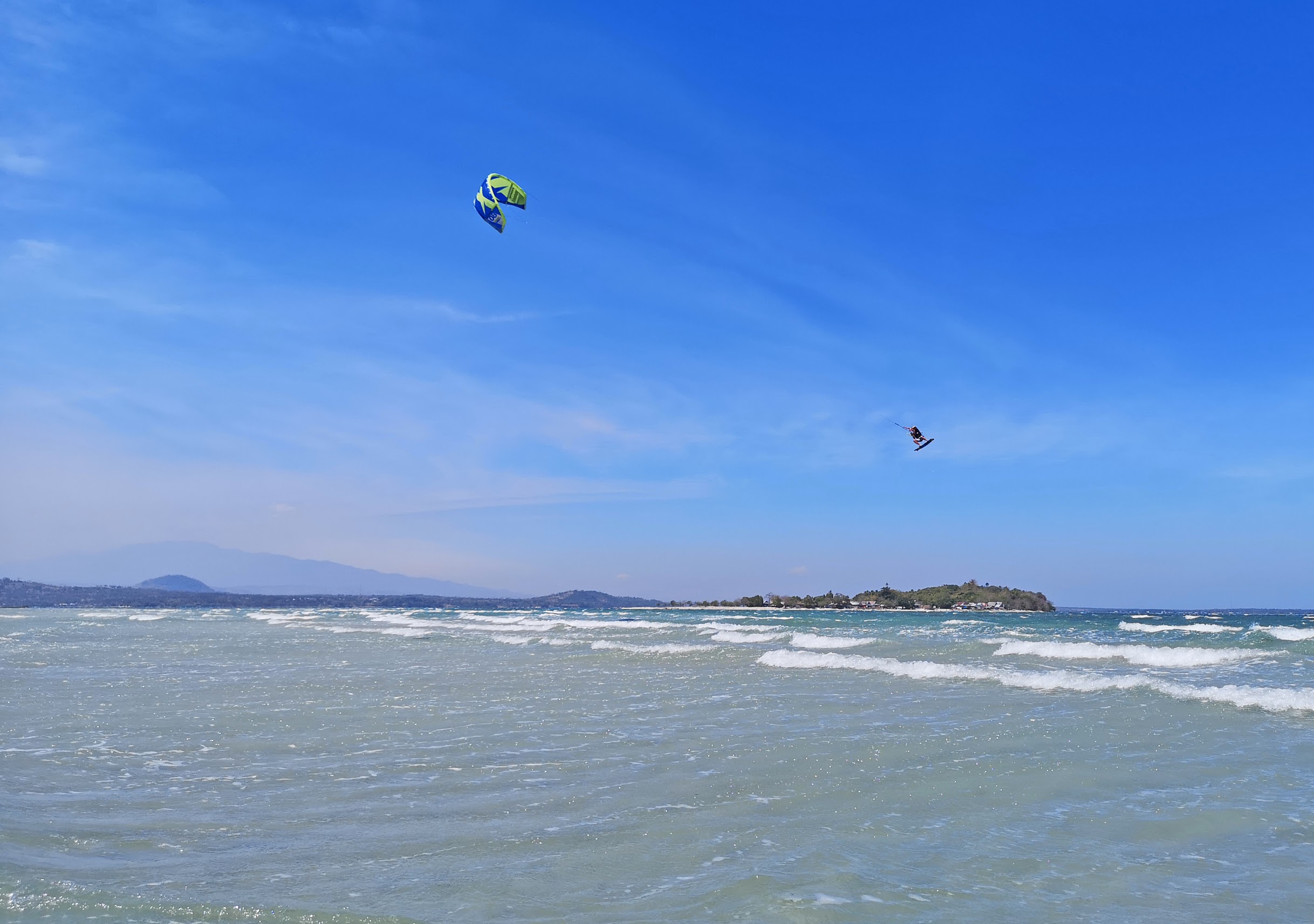
Best for: Ride, Eat, Sleep, Repeat.
Reliable wind, fast progression and flat-water big airs.
Jeneponto is the spot we know best, and naturally our personal favourite ;-)
Located in South-Sulawesi, Jeneponto offers a very different experience from the established tourism areas of Bali. The coastline remains largely undeveloped, the local environment feels authentic, and you are unlikely to spend your session weaving through a crowded kite zone.
Jeneponto’s dry-season wind window runs from May to October, with the strongest conditions generally developing around the middle of the season. These conditions make Jeneponto particularly interesting for travelers looking for a summer kitesurf destination in Asia, when many northeast-monsoon spots are outside their best period.
Riding conditions
What makes Jeneponto special is not one single patch of perfect water. It is the way the playground changes as the tide moves.
At one stage of the day, learners and progressing riders can use the protected lagoon to build confidence. As the waterline shifts, freeriders and freestylers follow the flat-water sections, while small ramps farther out create opportunities for jumping. Local knowledge helps each rider find the right part of the spot rather than treating the entire lagoon as one uniform riding area.
Jeneponto’s dry-season wind window extends from May to October. Our published spot data indicates a typical range of 20 to 35 knots during the season and more than 80% kiteable days across the principal period. These figures describe the season rather than guaranteeing identical wind every day, so riders should still check the daily forecast and arrive with an appropriate quiver
Why we like it
- Main wind season during the European summer
- Strong and consistent southeast trade wind
- Flat and shallow lagoon
- Suitable riding zones for different levels
- Warm water and dry-season weather
- Very limited kite traffic
- Lessons and rental equipment available at the spot
- Beachfront accommodation overlooking the riding area
Jeneponto Kitesurfing operates with F-One and Manera equipment for lessons and rental, and the equipment is regularly renewed.
What to consider
- Jeneponto is not a mainstream tourism destination
- Nightlife and shopping are limited
- The wind can become strong during peak season
- Riders should follow local guidance regarding tide and riding zones
- Travellers looking for a polished commercial resort area may prefer a more established destination
For us, these are not necessarily disadvantages. The absence of mass tourism is precisely what preserves Jeneponto’s character.
Off the water
Jeneponto offers an opportunity to experience South Sulawesi beyond Indonesia’s usual tourism circuit. The region is known for local villages, fishing, agriculture and salt production.
This is not a destination built around beach clubs or international shopping. Evenings are more likely to involve dinner, conversation and checking the next day’s forecast.
For a longer itinerary, travellers can combine Jeneponto with other parts of SouthSulawesi like Tana Toraja and Bira.
Getting there
Jeneponto is reached by road from Makassar and its international airport. Our current destination information places the kite centre within approximately three hours of Makassar, depending on traffic and road conditions.
Accommodation is available directly at the spot. The beachfront property includes bungalows, a restaurant, lounge and swimming pool, allowing riders to stay close to the action rather than commuting each day with equipment.
Which of these uncrowded kitesurf spots in Asia is right for you?
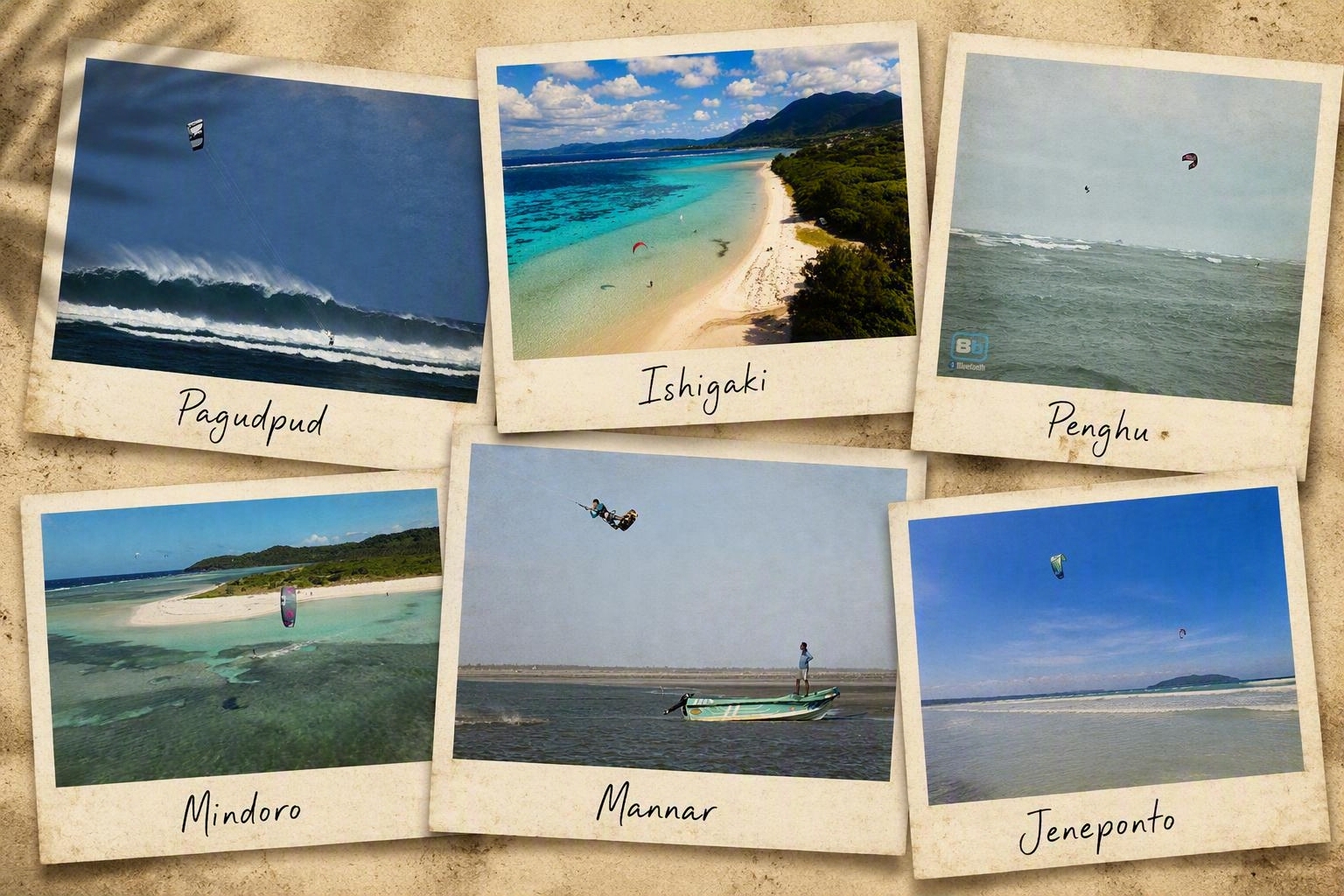
There is no single perfect kite destination. The right choice depends on your riding level, preferred conditions and travel dates.
Best for strong wind
Penghu & Jeneponto
Longmen is a serious northeast-monsoon option during the Asian winter. Jeneponto provides strong southeast trade wind during the middle of the year.
Best for flat water
Mannar & Jeneponto
Both offer lagoon-style riding and space for progression. Exact depth and conditions depend on location, wind and tide.
Best for wave-oriented riders
Pagudpud & Penghu
These destinations offer more exposure to swell and moving water. They are better suited to independent riders who are already comfortable in stronger conditions.
Best for beginners
Mannar, Mindoro & Jeneponto
The existence of flatter, shallower riding areas makes both destinations interesting for learning. The quality of the school, safety support, wind strength and lesson zone remain more important than the destination name alone.
Best for a mixed activity holiday
Mindoro & Ishigaki
Both provide strong alternatives for non-kiting days, particularly snorkelling, diving and island exploration.
Best for kitesurfing during the European summer
Jeneponto & Mannar
Their principal wind periods fall between approximately May and September or October, making them relevant when many winter-monsoon destinations are off-season.
Best for a remote and tropical authentic experience
Mindoro & Jeneponto
All six spots offer something beyond mainstream kite tourism, but Jeneponto & Mindoro stand out for riders who are comfortable travelling farther in exchange for quieter water and a stronger connection with the local environment.
What to check before booking a remote kite destination
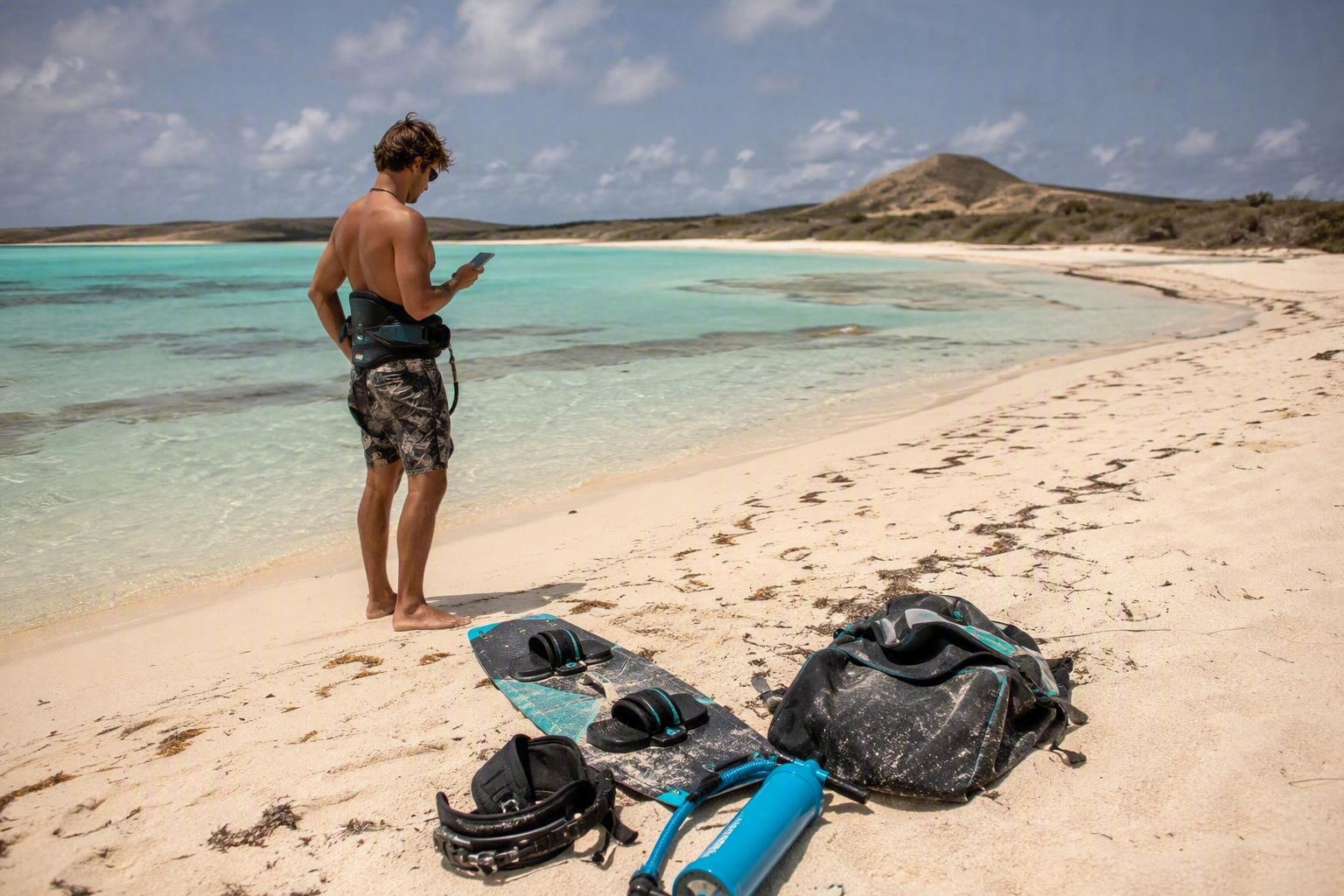
Remote spots can deliver unforgettable sessions, but they require more preparation than established kite resorts.
Before committing to flights, check:
- The main wind season and historical reliability
- The expected wind range for your travel dates
- Suitable kite sizes for your weight
- Tide dependence
- Water depth and bottom conditions
- Reef, current and shore-break hazards
- Availability of lessons, rescue support and rental equipment
- Airline kite-bag policies
- Distance between accommodation and the launch
- Medical and travel insurance covering kitesurfing
- Local access rules and community expectations
An empty spot is only enjoyable when you can ride it safely. If there is no local safety support, avoid riding alone, even if the conditions look perfect.
Final thoughts
The best kite trips are not always the ones with the biggest parties or the most famous beach names.
Sometimes the real luxury is launching without stress, choosing your own line and finishing a session without having counted fifty other kites in the sky.
Whether you’re looking for waves, flat water, big air, or simply fewer riders on the water, these kitesurf spots list in Asia prove that hidden gems still exist.
Longmen Beach delivers serious wind and strong-wind energy. Mannar offers space and flatter water. Pagudpud combines tropical scenery with waves and powered conditions. Mindoro works well for a more flexible island holiday. Ishigaki adds Japanese comfort to a subtropical kite adventure.
It is not trying to become another Bali, and that is exactly the point.
If your ideal kite holiday involves waking up beside the spot, riding without a crowd and spending more time on the water than waiting for wind, Jeneponto deserves a place on your list.
Plan your Jeneponto kitesurf trip
Explore the Jeneponto kitesurfing spot and conditions or discover the beachfront kitesurf camp and accommodation.